
Today, we live in the shadow of history. We would not be here without a multiplicity of events having already taken place around the world and in our lives. In that sense, we are not just aware of history, we are in fact debtors to history.
But what shapes history? What moves it along, keeps it on track, ensures it comes to pass? For the Christian, the answer is not a ‘what’ but a ‘Who.’
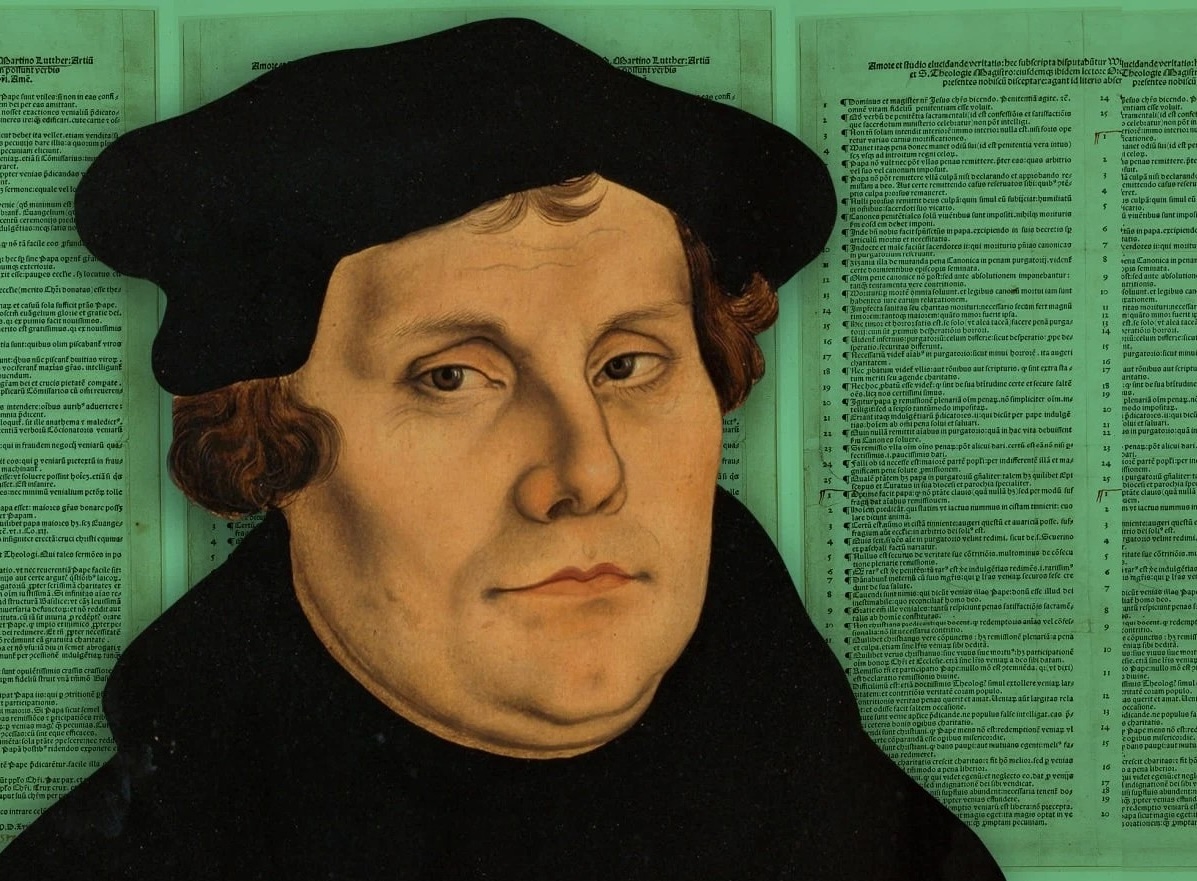
Today on Reformation Day, as we think about the Reformation of the Church in the 16th century, as we hear about people like Martin Luther, his wife Katharina, John Calvin, Lady Jane Grey, Ulrich Zwingli, John Knox, Argula von Grumbach, and many more, we can appreciate their efforts and acknowledge our debt to them because we know Who stood behind all their accomplishments.
It was God himself.
And as men and women like these Reformers, and so many others during their time and after, we must come to understand that it is God himself who stands at the center of all things.
One of the things to emerge from the Reformation was kind of theological short-hand. It was a way of expressing—in a popular, memorable way—what they were arguing had been lost by the Church and needed to be recovered. This emphasis was seen in five slogans: sola Scriptura, sole fide, sola gratia, solus Christus, and Soli Deo Gloria. These are phrases are Latin for: Scripture alone, faith alone, grace, Christ alone, and the glory to God alone.
What were they saying? They were saying, ‘This is how we come to know God.’ It’s not by tradition or works or by anything we do, even when aided by God. Instead, the way we come to know God–the way we come to be saved by God–is through a knowledge of the gospel in Scripture alone, by grace alone, through faith alone in Christ alone to the glory of God alone. Salvation isn’t about us. Salvation is about God and what he does for sinners.
This is why centuries later, the great theologian B. B. Warfield would say that the work of the Reformation and its theology is really about this one things: “an apprehension of God in majesty.” If I were to have to point to a major problem in the Church at large today, it would probably be at this very point: we have lost a real and pervasive sense of the majesty of God. We have mistaken lightness for intimacy, sincerity for orthodoxy, and relevance for godliness. In other words, we have often moved God from the very center of everything and put ourselves in its place.
This is why constantly going back to the Scripture and thinking about history of the church, seeing things like the emphasis of the Reformers will help us today come back to a more biblical and robust Christianity.
Toward that end, do what they did: Read the Scriptures! Focus on those parts that reveal God’s glorious majesty and consider this worthiness of our love and devotion. Grow in your awe of some and affections for him as the one who saves us in Christ!
To help with this, we can also read the Reformers (and their heirs). Join the Dead Theologians Society and read some helpful works that will freshly capture the beauty of God and enliven your heart toward him. To get started, consider reading The Freedom of the Christian (Luther), A Little Book on the Christian Life (Calvin), or a devotional collection called Grace from Heaven: Prayers of the Reformation).
Like John the Baptist, we desire him to increase even as we decrease!
Soli Deo Gloria

 MAGNIFY CHRIST